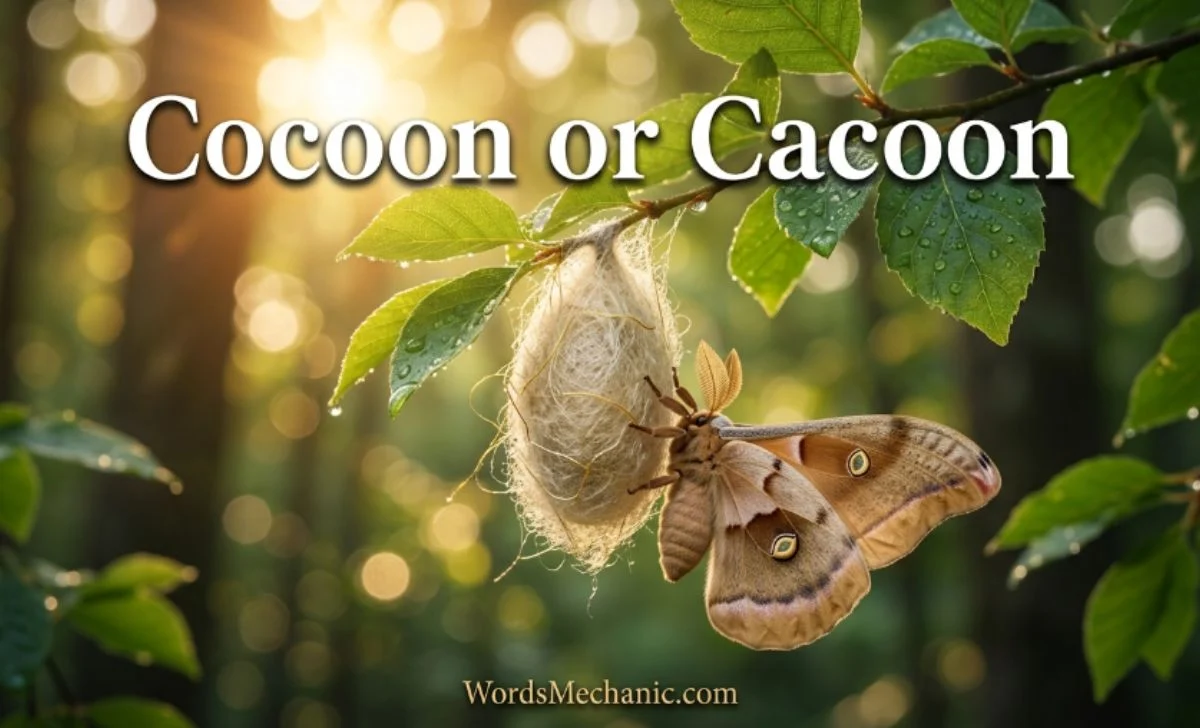
Have you ever typed cacoon and wondered whether it was the right spelling? This is a common spelling confusion because the word sounds similar when spoken.
However, only one spelling is correct in standard English.The correct word is cocoon. A cocoon is a protective covering made by the larvae of some insects, especially moths, during their development.
The spelling cacoon is not accepted in modern English dictionaries and is usually a mistake.Besides its meaning in nature, cocoon is also used in everyday English to describe a comfortable or protected environment.
For example, someone may create a quiet home space where they feel safe and relaxed.This guide explains the meaning, pronunciation, correct usage, and difference between cocoon and cacoon with clear examples.
Quick Answer
The correct spelling is cocoon.
Cacoon is not a standard English word. If you are writing about an insect covering, a butterfly-related topic, or using the word in a figurative way, use cocoon.
Examples:
✅ The moth stayed inside its cocoon until it completed its transformation.
❌ The moth stayed inside its cacoon until it completed its transformation.
What Does Cocoon Mean?
A cocoon is a protective case made from silk or other materials by certain insects. It protects the insect while it changes from a larval stage into an adult.
The most common examples are moths and silkworms. After a caterpillar reaches a certain stage of development, it may create a cocoon where it remains protected during metamorphosis.
The word cocoon can also have a non-scientific meaning. It can describe a place, feeling, or situation that provides comfort and protection.
Examples:
- The moth formed a cocoon around itself before becoming an adult.
- She enjoyed a peaceful evening in her cozy home cocoon.
- The warm blanket created a comfortable cocoon on a cold night.
Cocoon Definition in Simple English
A cocoon means a protective covering created by some insects during the stage when they develop into adults.
In simple words:
A cocoon is a safe covering where certain insects grow and change.
The word is mainly connected with insect life cycles, especially moths. However, its broader meaning is also used when talking about comfort, privacy, or protection.
Cocoon vs Cacoon: What Is the Difference?
The difference between cocoon and cacoon is spelling.
| Word | Meaning | Correct Usage |
|---|---|---|
| Cocoon | A protective covering made by some insects | Correct English spelling |
| Cacoon | No accepted English meaning | Common spelling mistake |
The word cocoon has been used in English for many years, while cacoon is simply an incorrect variation.
Many spelling mistakes happen because English pronunciation does not always clearly show the letters used in writing. Although the word sounds close to “cocoon,” the correct spelling always uses co-, not ca-.
Why Do People Write Cacoon Instead of Cocoon?
The mistake usually happens because people spell words based on sound. When spoken quickly, the first vowel sound in cocoon may not feel obvious, which can lead some writers to choose cacoon.
Common reasons include:
- Confusing pronunciation with spelling.
- Forgetting the correct vowel pattern.
- Typing quickly without checking the spelling.
- Seeing the incorrect form used online.
A simple way to avoid this mistake is to remember:
Cocoon starts with “co” — not “ca.”
Once you remember the first two letters, the correct spelling becomes easier to recall.
How Do You Pronounce Cocoon?
The correct pronunciation of cocoon is:
cocoon (kuh-KOON)
The word has two syllables:
co-coon
kuh-KOON
The stress is on the second syllable. The spelling may look simple, but some learners mispronounce it because they are unsure where to place emphasis.
Example:
The caterpillar stayed inside the cocoon until it completed its transformation.
Cocoon or Chrysalis: What Is the Difference?
Many people use cocoon and chrysalis as if they mean the same thing, but they are different.
A cocoon is a protective silk covering created by many moth caterpillars and some other insects. It surrounds the pupa during development.
A chrysalis is the hard outer shell formed by butterflies during their pupal stage. Unlike a cocoon, it is not a silk covering.
The easiest way to remember the difference:
- Moths usually make cocoons.
- Butterflies usually form chrysalises.
Example:
The moth developed inside a cocoon, while the butterfly rested inside a chrysalis.
Do Butterflies Make Cocoons?
Many people search for butterfly cocoon, but most butterflies do not actually make cocoons.
Instead, butterflies create a chrysalis. During this stage, the caterpillar changes into an adult butterfly through metamorphosis.
A butterfly’s life cycle includes:
- Egg
- Caterpillar (larva)
- Chrysalis (pupa)
- Adult butterfly
Moths follow a similar life cycle, but many moth species create a cocoon during their transformation.
What Animals Make Cocoons?
A cocoon is not an animal. It is a protective covering made by certain insects during their development.
Common insects that create cocoons include:
- Moths
- Silkworms
- Some butterflies’ relatives
- Certain other insects during their pupal stage
The most well-known example is the silkworm cocoon, which is made from silk fibers. These fibers have been used for centuries to produce silk fabric.
Not all insects make cocoons. Some, like butterflies, develop inside a chrysalis instead.
What Is a Moth Cocoon?
A moth cocoon is a silk covering created by a moth caterpillar before it becomes an adult moth.
Inside the cocoon, the insect enters the pupal stage. During this time, its body changes and develops into a mature moth.
Moth cocoons can vary in size, shape, and appearance depending on the species. Some are easy to see on trees or plants, while others are hidden in protected areas.
Example:
The gardener found a moth cocoon attached to a tree branch.
Cocoon in Everyday and Figurative Use
The word cocoon is not limited to insects. It is also used as a metaphor for comfort, safety, and isolation.
For example:
- A person may create a peaceful home environment as a personal cocoon.
- A warm blanket can feel like a cocoon during winter.
- Someone who avoids outside activity may be described as living in a protective cocoon.
This figurative use does not refer to an actual insect covering. It describes a feeling of being protected or separated from the outside world.
Common Mistakes When Using Cocoon
Although cocoon is a simple word, people often make mistakes with its spelling and meaning.
1. Writing Cacoon Instead of Cocoon
The most common mistake is replacing the first o with a.
❌ The insect created a cacoon.
✅ The insect created a cocoon.
Remember that the correct spelling starts with co-.
2. Calling a Chrysalis a Cocoon
Many people think every butterfly creates a cocoon, but this is not accurate.
❌ The butterfly stayed inside a cocoon.
✅ The butterfly stayed inside a chrysalis.
Most butterflies form a chrysalis, while many moths create cocoons.
3. Using Cocoon for Every Insect
Not every insect produces a cocoon. The term applies mainly to insects that create a protective covering during development.
For example:
- Moths → often make cocoons.
- Silkworms → make cocoons.
- Butterflies → usually form chrysalises.
Using the correct term makes scientific writing clearer.
How to Remember the Correct Spelling of Cocoon
A simple memory trick can help you avoid the spelling mistake:
Cocoon = CO + COON
The word begins with “co”, not “ca.”
You can also connect the word with its meaning:
A cocoon is a covering that protects an insect, and the rounded shape of the word itself can help you remember its unusual spelling.
Whenever you see cacoon, check the first vowel. The correct form is always cocoon.
Examples of Cocoon in Sentences
Here are natural examples showing how to use cocoon correctly.
Nature Examples
- The moth remained inside its cocoon until it became an adult.
- The silkworm produced a silk cocoon around itself.
- Researchers studied the insect’s cocoon during its development.
Everyday Examples
- The thick blanket created a warm cocoon on the cold evening.
- She enjoyed reading in her quiet home cocoon.
- The small room felt like a comfortable cocoon away from the busy world.
Writing Example
The documentary explained how insects transform while protected inside a cocoon.
These examples show that cocoon can be used in both scientific and everyday contexts.
Is Cocoon Used as a Verb?
Yes. Cocoon can also be used as a verb.
When used as a verb, it means to surround or protect someone or something.
Examples:
- The baby was cocooned in a soft blanket.
- The house was cocooned by tall trees and plants.
- She cocooned herself at home during the storm.
The verb form keeps the same idea of protection and comfort.
Cocoon Meaning in Modern English
In modern English, cocoon has two main uses:
- Literal meaning:
A protective covering made by certain insects during development. - Figurative meaning:
A safe, comfortable, or protected environment.
Understanding both meanings helps you recognize the word in different situations, from biology articles to everyday conversations.
FAQs
1. Is cacoon a real word?
No. Cacoon is not a standard English word. It is a common misspelling of cocoon.
2. What is the correct spelling: cocoon or cacoon?
The correct spelling is cocoon. It refers to a protective covering made by certain insects during their development.
3. What does cocoon mean?
A cocoon is a protective silk covering made by some insects, especially moths, while they change from a larval stage into an adult insect. It can also describe a safe or comfortable environment.
4. How do you say cocoon in English?
cocoon (kuh-KOON)
It is pronounced “kuh-KOON”, with the stress on the second syllable.
5. What is the difference between a cocoon and a chrysalis?
A cocoon is a silk covering usually made by moth caterpillars, while a chrysalis is the hard pupal stage of a butterfly. They are different structures used during insect development.
6. Do butterflies make cocoons?
Most butterflies do not make cocoons. They form a chrysalis instead. Many moths, however, create cocoons before becoming adults.
7. What animals make cocoons?
Cocoons are made by certain insects, including moths and silkworms. A cocoon itself is not an animal; it is a protective covering created during development.
Conclusion
The correct spelling is cocoon, not cacoon. The incorrect form is a common spelling mistake caused by confusion about pronunciation.
A cocoon is a protective covering made by certain insects, especially moths, during their transformation into adults.
Although people often connect cocoons with butterflies, most butterflies actually develop inside a chrysalis.
The word cocoon can also describe a safe and comfortable environment in everyday English. Remembering that the correct spelling begins with co- will help you avoid this common mistake.