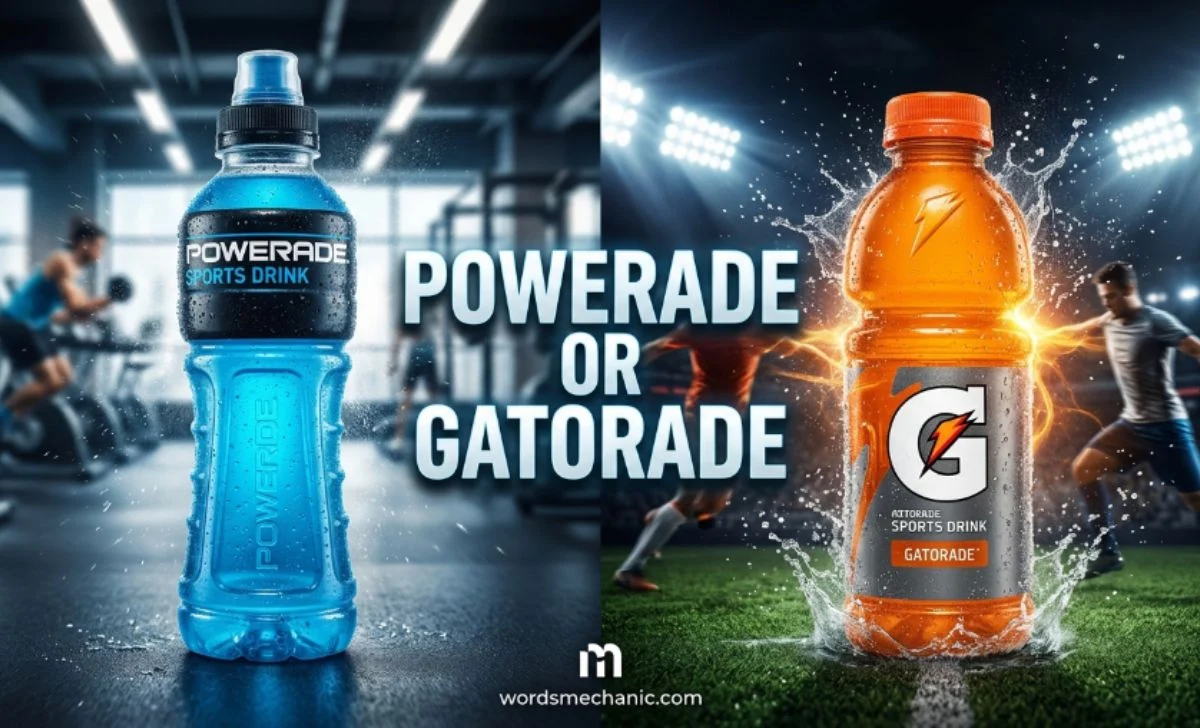
Sports drinks have become a major part of modern fitness and athletic culture. From professional athletes in stadiums to casual gym users, drinks like Powerade and Gatorade are widely consumed for hydration and energy support.
Both products look similar, taste similar, and serve the same general purpose. However, behind the branding and marketing, there are meaningful differences in their history, formulation, nutritional profile, and intended use.
Understanding the difference between Powerade and Gatorade helps you decide whether you actually need them and which one suits your body, activity level, and hydration needs better.
Powerade vs Gatorade: Quick Overview
Powerade and Gatorade are both classified as electrolyte sports drinks designed to:
- Rehydrate the body after sweating
- Replace electrolytes like sodium and potassium
- Provide quick carbohydrates for energy
Despite this shared purpose, they are developed by competing companies with different philosophies:
- Gatorade focuses more on electrolyte replenishment and athletic recovery
- Powerade focuses more on hydration plus added vitamins
Both are effective in endurance sports, but neither is significantly superior in all conditions.
History and Brand Background
Gatorade: The Original Sports Drink
Gatorade was created in 1965 at the University of Florida. A team of researchers developed it to help the university’s football players perform better in extreme heat and humidity.
The original formula included:
- Water
- Sugar
- Sodium
- Potassium
- Lemon juice
- Phosphate
It was initially called “Gator-Aid,” inspired by the Florida Gators team.
By 1967, the team’s success in major games increased interest in the drink, and it soon became commercially available in 1969. Over time, it changed ownership and is now owned by PepsiCo.
Today, Gatorade is one of the most dominant sports drink brands globally and is officially associated with many professional sports leagues.
Powerade: The Challenger Brand
Powerade was introduced in 1988 by The Coca-Cola Company as a direct competitor to Gatorade.
By the time Powerade entered the market, Gatorade already dominated the sports drink category. However, Coca-Cola leveraged its global distribution network and Olympic sponsorships to establish Powerade as a strong alternative.
Although Powerade holds a smaller market share compared to Gatorade, it remains one of the most widely consumed sports drinks worldwide.
Core Ingredients Comparison
Both drinks share a similar foundation, but the type of sweeteners and added nutrients differ slightly.
Common Ingredients
Both Powerade and Gatorade typically include:
- Water
- Citric acid
- Natural and artificial flavors
- Salt (sodium source)
- Sweeteners (carbohydrates)
These ingredients are designed to rapidly absorb into the body and replace fluids and energy lost during physical activity.
Sweeteners Used in Powerade vs Gatorade
The most important difference lies in the sugar type used.
| Brand | Sweetener Type | Description |
|---|---|---|
| Gatorade | Dextrose | A simple glucose form that is quickly absorbed |
| Powerade | High fructose corn syrup | A sweeter form of sugar used for taste and energy |
What does this mean?
Both sweeteners are simple carbohydrates and provide similar energy output. However:
- Powerade often tastes sweeter
- Gatorade has a more balanced salty-sweet profile
- Nutritional impact is nearly identical in moderation
Nutrition Facts Comparison
A standard serving (approx. 20 oz bottle) shows that both drinks are very close in nutritional value.
| Nutrient | Powerade | Gatorade |
|---|---|---|
| Calories | ~130 | ~140 |
| Carbohydrates | ~35g | ~36g |
| Sugar | ~34g | ~34–36g |
| Sodium | Slightly lower | Slightly higher |
| Potassium | Moderate | Moderate |
| Protein | 0g | 0g |
| Fat | 0g | 0g |
Electrolytes and Hydration Science
Electrolytes are minerals that regulate hydration, nerve function, and muscle contractions.
Key electrolytes include:
- Sodium
- Potassium
- Magnesium
- Calcium
During intense exercise or heat exposure, these minerals are lost through sweat.
Electrolyte Difference
- Gatorade contains slightly higher sodium levels
- Powerade includes similar electrolytes but adds vitamins in some variants
Why sodium matters
Sodium is critical because it:
- Helps retain fluid in the body
- Prevents dehydration
- Supports muscle function during long exercise
This is why endurance athletes often prefer drinks with higher sodium content.
Added Vitamins in Powerade
One major difference is that Powerade often includes added micronutrients such as:
- Vitamin B3 (Niacin)
- Vitamin B6
- Vitamin B12
- Magnesium
These nutrients support:
- Energy metabolism
- Nervous system function
- Red blood cell production
However, these vitamins are present in relatively small amounts and are not a replacement for a balanced diet.
Gatorade generally focuses more on electrolytes rather than vitamin enrichment.
Market Position and Popularity
Gatorade dominates the sports drink industry, holding the majority share of the global market. It is widely used in professional sports and is heavily associated with athletic performance culture.
Powerade, while smaller in market share, remains a strong competitor due to Coca-Cola’s global reach and Olympic sponsorships.
In simple terms:
- Gatorade = Market leader with strong sports identity
- Powerade = Strong competitor with broad availability
Performance Benefits: Do They Really Work?
Sports drinks are designed based on the concept of oral rehydration therapy, which replaces fluids and electrolytes lost during sweating, illness, or exertion.
When they are effective:
- Endurance running
- Cycling
- Football, cricket, or outdoor sports
- Long gym sessions (>60 minutes)
- High heat conditions
When they are unnecessary:
- Short workouts
- Light gym training
- Daily casual hydration
- Office lifestyle activity
Scientific studies suggest:
- Carbohydrate-electrolyte drinks improve endurance performance
- They help maintain blood glucose levels during long exercise
- They reduce fatigue in prolonged physical activity
However, there is no strong evidence that Powerade is significantly better than Gatorade or vice versa.
Taste Differences Between Powerade and Gatorade
Taste plays a major role in consumer preference.
- Powerade is often perceived as sweeter and smoother
- Gatorade has a more balanced sweet-salty profile
These differences come from:
- Type of sugar used
- Electrolyte concentration
- Flavor formulation
Because taste is subjective, preference varies widely between users.
Health Considerations and Risks
While sports drinks are effective for performance, they are not health beverages for everyday consumption.
Main concern: sugar content
A single bottle may contain over 30 grams of sugar.
Excess intake can lead to:
- Weight gain
- Blood sugar spikes
- Increased risk of metabolic issues
- Dental problems
Important clarification
Sports drinks are not meant to replace water. They are functional beverages intended for specific physical conditions.
For most people, especially those not engaging in long-duration exercise, water remains the best hydration option.
Powerade vs Gatorade: Key Differences Summary
| Feature | Powerade | Gatorade |
|---|---|---|
| Sweetener | High fructose corn syrup | Dextrose |
| Taste | Sweeter | Balanced |
| Electrolytes | Moderate | Slightly higher sodium |
| Vitamins | Yes (B vitamins, magnesium) | Limited |
| Market position | Challenger brand | Market leader |
| Best for | General hydration + light exercise | Endurance + heavy sweating |
Which One Should You Choose?
The choice depends on your activity level and preference.
Choose Powerade if:
- You prefer a sweeter taste
- You want added vitamins
- You do moderate exercise
Choose Gatorade if:
- You do intense or long-duration sports
- You sweat heavily
- You need stronger electrolyte replacement
Or choose neither if:
- You are doing light exercise
- You are not sweating significantly
- You want everyday hydration
In most casual cases, water is sufficient.
Conclusion
The comparison between Powerade and Gatorade shows that both drinks are very similar in function, nutrition, and effectiveness. The main differences lie in their branding, sweetener types, electrolyte focus, and added nutrients.
Gatorade has a stronger focus on performance and electrolyte replenishment, making it slightly more suitable for endurance athletes. Powerade includes additional vitamins and a sweeter profile, appealing to general fitness users.
However, neither drink is objectively superior in all situations. The real difference comes down to personal preference, exercise intensity, and hydration needs.
For athletes, both can be useful tools during prolonged physical activity. For everyday hydration, water remains the healthiest and most practical choice.